Recently in Dog Bite Injuries Category

August 23, 2010

There's Hope for New York Cyclists and Pedestrians Injured By Unleashed Dogs: Some Insurance Adjusters Don't Understand New York Dog Law

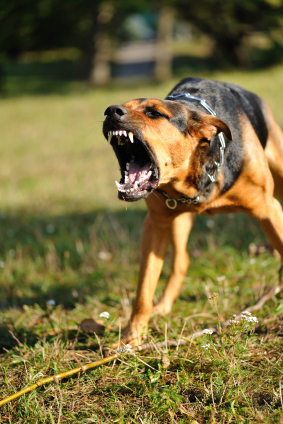
Thumbnail image for vicious dog.jpgMy last Central New York injury law blog was about New York dog law and how it has no "teeth". It doesn't protect innocent bicyclists, pedestrians and runners from dog bites and dog attacks because it does not make dog owners pay for injuries their dogs inflict when they violated leash laws. I explained how in New York, unlike in other states, a dog owner is not liable for the injuries his dog causes to pedestrians, bikers, runners and others merely because he violated a leash law and allowed his dog to roam unrestrained. In New York this is not enough. You have to show that the dog owner knew or should have known of the dog's vicious tendencies, or of its tendency to run out after pedestrians, runners or bicyclists. This is sometimes hard to prove, because the dog owner will invariably deny that his dog ever did this before.

But, as usual after I publish a blog, I had a "I should-have-said" moment. In this case, I should have added an anecdote about a case I had a few years ago where the dog owner's insurance adjuster (with whom I was negotiating behalf of my client) did not know this rule. He, like many people, assumed that a dog owner would be liable for injuries caused by a dog when the dog owner disobeyed a leash law, thus allowing the dog the opportunity to attack a bicyclist, runner or pedestrian.

I settled the case with him and got my client a fair settlement, even though I knew I was able to do so only because the adjuster was ignorant about the law. Did I feel bad about that? Absolutely not; my client deserved the compensation, I did not deceive the insurance company about the law, rather, its adjuster was just too lazy to look it up, and the law in New York is so unjust that this "error" on the part of the insurance adjuster actually worked a justice.

Are there any lessons to be drawn from this story? There are three. First, sometimes justice can be done in unexpected ways. Second, don't assume insurance adjusters know the law. Third, play your cards close to the vest and you may get lucky.

Bookmark and Share
August 21, 2010

Is a Dog Owner Who Violates a New York Leash Law Liable For Injuries Suffered in a New York Dog-on-Bicyclist or Dog-on-Pedestrian Attack?

Thumbnail image for vicious dog.jpgI hate dogs. At least when I am on a bike or out running. I have a dog ("Pisca"), but she is not like those dogs. She does not run out after bicyclists and runners. I keep her inside unless I am walking her, and then she is leashed.

Maybe my view of the world is skewed because I handle a lot Syracuse and Central New York bicycle accident cases, where I see close up how lives, damn good ones, are destroyed by unrestrained dogs.

But I am not the only one who thinks dogs should be restrained. After all, many New York State local lawmakers agree with me. They pass "leash laws". Many dog owners apparently don't agree with me and the lawmakers, though, because they let their dogs roam free, leash laws be damned!

So here is my blog query for the day: What happens in a New York dog-on-biker attack, or a New York dog-on-runner attack, where a scofflaw dog owner lets his dog loose in violation of a local New York leash law? Can you sue the law-breaking dog owner to compensate you for the broken bones you suffered in your crash to the pavement from your bike, or to replace your broken bike, or to compensate you for the bite scars on your butt?

Amazingly, no, not usually! Not in New York anyway. Unlike many States, in New York State a dog owner is not liable for injuries caused by unrestrained dogs, even when the owner violated a local leash law, UNLESS the dog owner knew or should have known that the dog had prior vicious propensities, or had a tendency to run out after bicycles, cars or pedestrians. And if you don't believe me, here's a recent case from the highest Court in New York State that says so.

Wow. Sounds counterintuitive, doesn't it? Shouldn't the scofflaw dog owner be liable for breaking the leash law? Yes! And they are held liable in many States. But New York's dog law has - unlike New York's dogs -- no teeth.

Now compare New York's dog friendly law to Massachusetts' bicycle and pedestrian friendly law. Those lucky Massachusetts runners and bikers are protected by a statute, Massachusetts General Laws c. 140 s. 155, which makes a dog owner strictly liable for all bites and other attacks, including against bicyclists, as long as the victim was not trespassing, teasing or tormenting the dog. Under Massachusetts law, dog owners are not only required to restrain and control their dogs, they may be held liable for injuries resulting from their failure to do so, even if the dog had never attacked runners or other pedestrians, or bothered or chased down bicyclists before. You let your dog loose at your own risk, not the risk of others.

Apparently, New York prefers dogs to people. Or perhaps the dog owner lobby is just stronger than the bicyclist lobby. Whatever the reason, New York needs a leash law with real teeth, because , hey, that's what dogs have (believe me -- I've got a few scars to prove it!).

Bookmark and Share
June 28, 2010

Auburn New York Dog Bite Case Perfect Example of New York Dog Bit Liability

vicious dog.jpgThe Syracuse Post Standard reported today that an Auburn, New York police officer suffered muscle wounds and injuries requiring stitches after a pit bull attacked him Sunday night. The officer had walked up a driveway on East Genesee Street to investigate some smoke coming from the back (it turned out to be a pit fire), when a large pit bull charged at him from the porch with such fury that it broke free of its tether. The dog sunk its teeth into the officer's right arm and right upper leg before the dog's "dog sitter" pulled the dog free of him.

After years of handling Central New York dog bite cases, I read newspaper articles like this somewhat differently than most people. I "analyze" the case from a "liability" perspective as I read. It's a professional hazard!

But now that I am on the topic, let's talk about the liability issues in this case. Is the dog owner, who was not home, liable to the officer? What about the dog "sitter"? Is anyone liable? After all, the dog broke free of its chain, so the owner, or the sitter, had at least taken the precaution of tying the dog up. Does it matter whether they had tried to be careful in securing the dog?

Here's how New York dog bite liability law works: If a dog bites you, the owner is automatically (lawyers say "strictly" liable), as long as you can prove that the owner knew or should have known that the dog had "vicious propensities" (which usually means it had bitten or attacked, or indicated that it wanted to bite or attack, someone else before). Does it matter whether that they tied the dog up? No! Again, the owner is automatically liable to the dog-bite victim if he knew or should have known his dog had that kind of violent "tendency".

On the other hand, the owner can lessen his liability somewhat if he can prove that the dog-bite victim was partially responsible for getting bitten. This is called the "comparative negligence" defense. If a jury agrees that the bite victim was partially responsible (for example, if he had been tormenting the dog, or got too close to it knowing that it was a mean dog), the jury can lower the verdict in proportion to the fault of the victim. For a more complete analysis on New York dog bite law, see my prior blog post on the subject .

The police officer here actually has a better New York dog attack case than you or I would. Why? Because of New York's General Municipal Law (GML) section 205-e, a special law that protects police officers. Here, if the police officer's lawyer can find that a State statute or local regulation regarding pit bulls, or dog leashes, or harboring dangerous dogs, was violated, he can bring a claim under GML 205-e. The good thing about GML 205-e is that the person who caused the injury by violating the regulation or statute can't claim any "comparative negligence" against the officer. That means that even if the officer was himself partly to blame for getting bitten, the owner will be responsible for fully compensating his injuries, medical expenses, lost wages, etc.

So now you know how it feels to read a newspapers story like a New York dog bit lawyer! Aren't you glad you don't do this for a living?!

Bookmark and Share
February 20, 2010

Syracuse New York Dog Bite Lawyer Explains How to Prove a New York Dog Bite Case

dog.jpgWould you keep an appliance in your home if you knew these facts about it:

(1) It injures about 800,000 people a year in the USA - with one out of every 6 injuries being serious enough to require medical attention.
(2) 75% of the injuries are to the victim's face.
(3) Its victims are three times more likely to be children than adults.
(4) It is the fifth most frequent cause of emergency hospital visits for children in t he USA.
(5) The most severe injuries occur almost exclusively to children less than 10 years of age.

The answer is "YES", you would keep such a product in your home. The product is called a "dog", a/k/a "man's best friend". We humans love dogs and are willing to live with these risks because of the love, support and companionship that dogs provide. I am a dog owner myself!

But make no mistake; owning a dog is a BIG legal responsibility. If you do not act responsibly as a dog owner, you can, and should, be held accountable for injuries your dog causes. See my previous blog about dog safety tips.

Here are the basic rules for proving a New York dog bit case: In New York, a dog owner (defined as anyone who harbors a dog) is liable for dog attacks if, and only if, the dog bite victim can prove two things: (1) the dog had "vicious propensities" (i.e., a tendency to attack) and (2) the owner knew or should have known it. That's a pretty straightforward two-step process. Or is it?

The problem is proving an owner knew of the dog's vicious propensities. The best and surest way to do so is to show the dog bit someone before. If you can prove that, your case is usually a slam dunk. But sometimes you don't have a prior bite. What then?

You can show "vicious propensities" in other ways, for example, if the dog tended to growl, snap or bare its teeth at people. It also helps if you can show that the owner tended to think of his own dog as dangerous by doing one or more of the following things: tying or chaining the dog up; fencing the dog in, keeping the dog as a guard dog, putting up "beware of dog" signs, or warning people verbally that the dog was dangerous.

Any dog can bite, but statistically the most likely dogs to bite are pit bulls and Rottweilers, and when these dogs bite, they mean business; together these breeds account for about 70% of dog-bite-related deaths.

So can you prove your New York dog bite lawsuit simply by showing the dog's breed was dangerous? NO! New York courts have rejected the theory that certain dog breeds can be "assumed" in court to be more "vicious" than others. In other words, the courts reject "breeedism", and instead treat all dogs equally in court, no matter what the breed.

If you or your child has been bitten by a dog, feel free to call or contact me for more information.

Bookmark and Share
November 4, 2009

Auburn / Syracuse Dog Bite Lawyer Gives Safety Tips for Avoiding Dog Bites

Thumbnail image for dog.jpg We just learned of a a Seneca County dog bite case, and as usual, the victim was a child. At Michaels & Smolak we take in several dog bite cases a year. While the injuries from dog bites are not usually life threatening, the scarring is often disfiguring and permanent. Especially with children, the bites tend to be in the face.

In this case, the child was only 3 years old, and was visiting an apartment with his parents. The dog looked friendly, so the parents let their guard down, and let their child get close. The dog lunged and bit the child in the face, causing a terrible gash in his nose, requiring 15 stitches. We are hoping for a good recovery. In a way he was lucky; the bite just missed the eye.

I am a runner and bicyclist, and have had my own run-ins with dogs. I have been bitten by dogs twice while running, and a dog caused me to fall off my bicycle once, too. Dog owners are supposed to keep their dogs on their property, but they don't always do so, especially out in the countryside where I run and bike.

According to the Center for Disease Control and Prevention, 4.5 million Americans are bitten by dogs each year. Children are more likely to be bitten than adults.

Here are some safety tips I have learned from several sources for avoiding dog bites:
• Never leave young children alone with a dog.
• Avoid direct eye contact with dogs.
• Never get your face near the dog's face.
• If you feel threatened by a dog, don't run or scream; remain still.
• If you end up on the ground, roll into a ball and be still.
• Never disturb a dog while it is eating or sleeping or with its puppies.
• Allow a dog to sniff you before you pet it.
• Remain motionless when approached by an unfamiliar dog.
• If bitten, immediately report the bite to the owner and to the police or other local authorities to see if you need to get rabies shots.

If you have a significant injury, call a good dog bite lawyer soon. He can protect your rights to get fair compensation. To learn about how you prove a dog bite case, visit our website at the "general negligence" practice areas button.

And please be safe around dogs.

Bookmark and Share